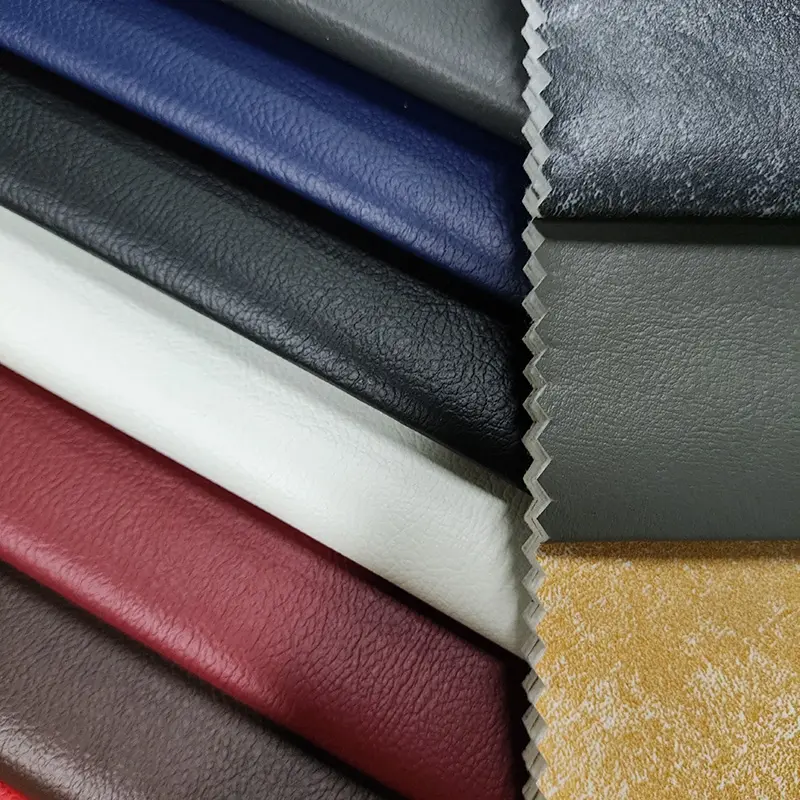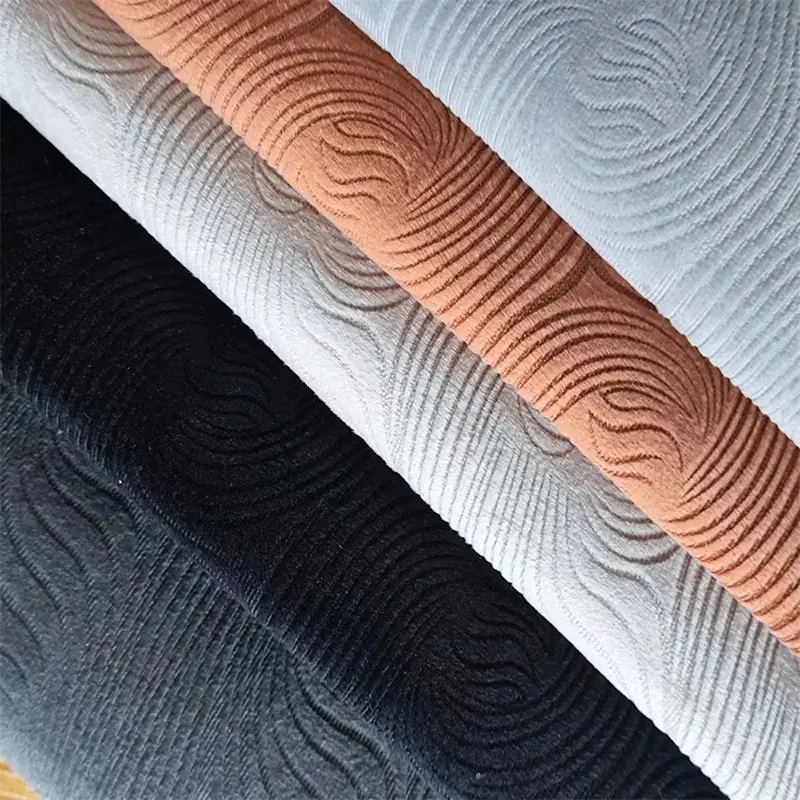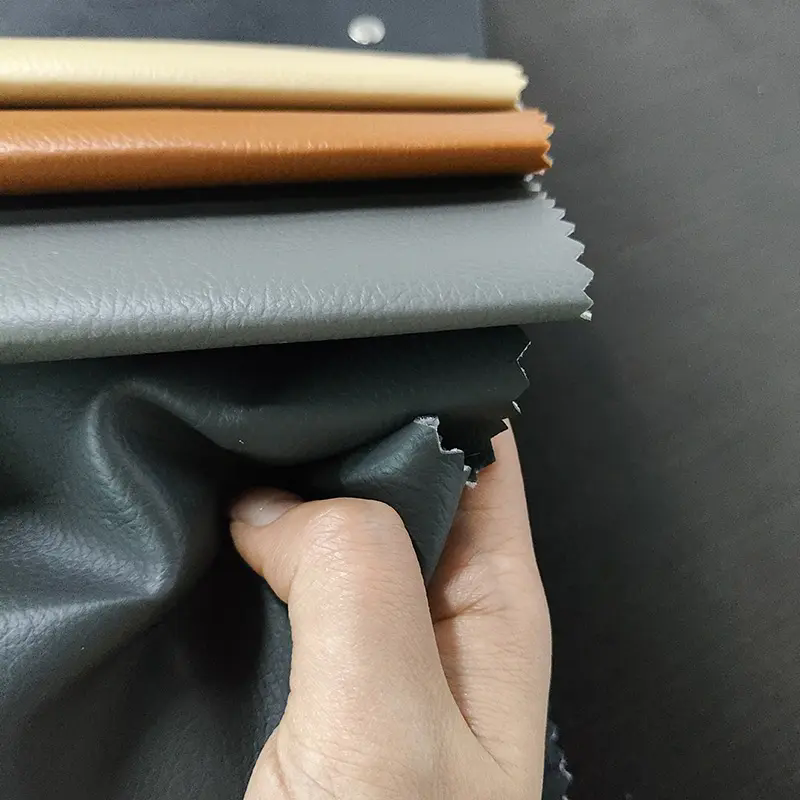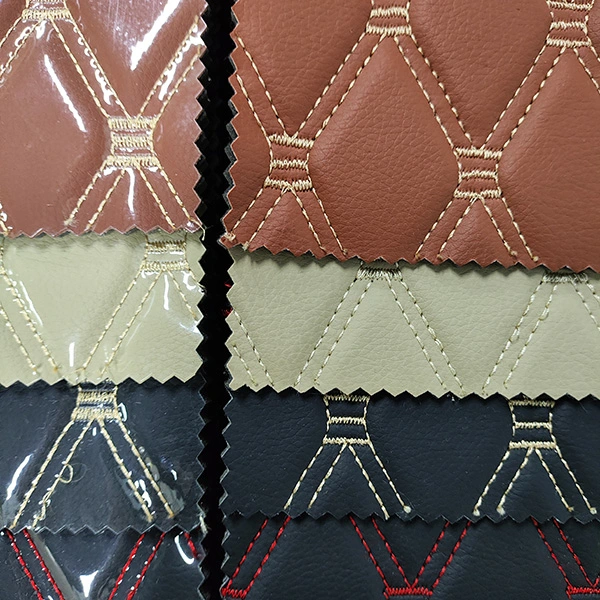
A vehicle's ceiling is one of the few surfaces every occupant sees, touches, and lives beneath for the entire life of the cabin. The right Fabric For Car Roof must do far more than look acceptable on a card: it has to hold its shape across a contoured shell, resist moisture and static, satisfy flammability expectations, and survive years of temperature cycling without sagging or discoloring. This breakdown covers the engineering logic behind polyester headliner fabrics, explains how weight and width choices affect installation outcomes, and offers a practical selection framework for trimmers, distributors, and interior programs that need repeatable results rather than one-off fixes.
Click any section below to jump directly to the content.
- Why the Ceiling Deserves More Attention Than It Usually Gets
- How Polyester Became the Backbone of Modern Headliner Fabric
- The Weight Band That Separates a Smooth Install from a Costly Rework
- Width, Waste, and the Economics of a Clean Roof Panel
- Four Performance Properties That Are Built In, Not Sprayed On
- Certification as a Procurement Filter, Not a Marketing Badge
- A Selection Framework for Trimmers and Interior Programs
- Frequently Asked Questions
Why the Ceiling Deserves More Attention Than It Usually Gets
Walk through almost any vehicle interior conversation and the attention lands on seats, dashboards, steering wheels, and screens. The ceiling is treated as background. Yet the headliner is the one surface that frames every glance upward, absorbs a meaningful share of cabin noise, conceals wiring and structural hardware, and determines whether a cabin feels tight and finished or loose and tired.
When a headliner begins to sag, bubble, or discolor, the entire interior reads as neglected even if every other surface is immaculate. The reason is structural. A modern headliner is not a single sheet of cloth. It is a layered assembly: a visible face fabric, a foam core that provides softness and acoustic damping, and a semi-rigid backing board that gives the assembly its shape and allows it to mount against the roof structure.
The face fabric is the layer occupants see and touch, but its behavior is inseparable from the layers beneath it. A fabric that is too stiff will fight the contour of the roof shell; one that is too light may telegraph substrate imperfections; one that lacks shape memory will crease during handling and refuse to recover before the adhesive sets.
Installation Is the Hidden Test
In practical terms, the ceiling is also the hardest interior surface to replace cleanly. Seats can be removed and rebuilt on a bench. Door cards can be swapped. The headliner board must be extracted through a door opening, stripped of old material, cleaned, re-covered, and reinstalled without cracking the substrate or leaving relief cuts visible at the corners.
That labor profile explains why material choice carries consequences far beyond the nominal price per meter. A fabric that installs predictably and holds its appearance reduces rework, protects the trimmer's reputation, and keeps a vehicle out of the bay for the shortest possible time. The specification is not a background detail; it is the variable that determines whether the job runs once or twice.
How Polyester Became the Backbone of Modern Headliner Fabric
Polyester's rise in automotive interiors is not accidental. It is a fiber that can be engineered across a wide range of weights and textures, holds dye consistently, resists moisture-driven degradation better than many natural alternatives, and accepts functional finishes without losing its hand or drape.
A well-specified Fabric For Car Roof can therefore be bonded across a shaped roof panel, trimmed around corners and apertures, and then live for years in an environment that cycles between cold mornings and sun-baked afternoons. The fiber chemistry does the quiet work: dimensional stability under heat, predictable stretch behavior during installation, and consistent shade reproduction from one production batch to the next.
Market Direction and Recycled Content
Polyester material within the automotive headliner segment has been growing at a meaningful pace, driven partly by lightweighting priorities. Lower fabric and foam weights help reduce overall vehicle mass without sacrificing coverage or appearance. At the same time, recycled polyester is moving from a niche option to a procurement expectation, aligning with circularity requirements that reward post-consumer content without demanding a trade-off in durability or aesthetics.
That shift matters for buyers because it changes what "good" looks like. A polyester headliner is no longer judged only on shade and softness. It is judged on whether the polymer chemistry and weave structure can deliver stable shape recovery, predictable stretch behavior during installation, and consistent batch-to-batch performance when the same specification is ordered six months later.
A fabric that looks correct on a card but varies in weight or width between shipments creates hidden costs in cutting, seaming, and rework. This is where a focused supplier with disciplined production oversight becomes more valuable than a catalog with hundreds of options. Most-Textile approaches this category with a purpose-built plain-weave polyester construction rather than a repurposed apparel or furniture cloth, developing the material around the specific demands of vehicle ceilings while keeping it adaptable enough for seats, sofas, and general upholstery work.
The Weight Band That Separates a Smooth Install from a Costly Rework
Fabric weight is often treated as a simple quality signal: heavier equals better. In headliner work, that assumption is too blunt. The appropriate weight depends on the roof geometry, the substrate condition, the installation method, and the visual result the program is trying to achieve.
A narrow weight band that covers both light and heavier requirements is more useful than a single fixed specification, because it allows the same material family to serve cost-conscious repairs and higher-end refits without forcing a change in supplier or weave style. A 180–270 g/sm spread is wide enough to be meaningful and tight enough to remain predictable.
At the lighter end, the fabric is easier to manage around complex curves and overhead apertures where excess bulk can create folds or bridging. At the heavier end, the fabric delivers stronger opacity, hides minor substrate irregularities more effectively, and provides a fuller, more substantial handle that reads as premium in the finished cabin.
| Material Composition | 100% polyester filament |
| Fabric Weight | 180–270 g/sqm |
| Usable Width | 55/56″ (142 cm) |
| Weave Style | Plain, multicolor |
| Functional Properties | Shape memory, water resistance, flame retardancy, anti-static |
| Certifications | EN, SGS, ROHS |
| Primary Applications | Headliners, car ceilings, car seats, sofas, furniture upholstery |
The risk of ignoring weight suitability is easy to underestimate. A fabric that is too heavy for a deeply contoured roof may require relief cuts or heat-assisted stretching that introduce visible stress points. A fabric that is too light for a flat but imperfect substrate may allow dark shadows or adhesive texture to show through, undermining the finished appearance even when the installation itself is technically sound.
Why Shape Memory Changes the Installation Equation
Shape memory is not a decorative claim. In a headliner fabric, it describes the ability of the material to recover from folding, rolling, and handling without retaining creases that cannot be worked out during installation. Roof lining is routinely shipped rolled or folded and then handled extensively in the trim bay.
A fabric without memory can arrive with creases that survive adhesive application and remain visible in the finished cabin. A fabric with memory returns to its intended surface character, which reduces the need for aggressive steaming or re-stretching and lowers the risk of overworking the material around corners.
Width, Waste, and the Economics of a Clean Roof Panel
Width is the quiet specification. It rarely appears in marketing headlines, but it determines how many seams a roof requires, how much offcut is generated, and whether a trimmer can cover a panel in one uninterrupted piece. A 142 cm usable width is closely matched to the dimensions of typical passenger-car ceilings.
In practice, that means most roofs can be covered without a central seam, which produces a cleaner visual field and removes a potential failure point where two edges meet. Fewer seams also simplify adhesive application. Every seam introduces an edge that must be aligned, bonded, and finished consistently.
On a curved roof shell, seam alignment becomes more difficult as the panel contour increases. A single-piece installation eliminates that variable and allows the trimmer to focus on stretch distribution and edge wrapping rather than seam concealment. The benefit is not only aesthetic: reduced handling at seams lowers the chance of adhesive starvation or edge lift later in the service life of the headliner.
Beyond the Vehicle Cabin
The same width logic transfers beyond automotive work. A 142 cm fabric is broad enough for sofa backs, cabinet panels, headboards, and other broad upholstery surfaces where a seamless face is preferred. For distributors serving both automotive trimmers and furniture makers, that dual applicability reduces inventory complexity. The fabric does not need to be re-specified for every end use; the width and weight band already cover a useful range of upholstery demands.
Four Performance Properties That Are Built In, Not Sprayed On
Headliner fabrics are often described with a list of performance claims that sound impressive on a spec sheet but behave differently after a few months in a vehicle. The distinction that matters is whether a property is inherent to the fiber and construction or applied as a temporary surface treatment. A coating can wear away through handling, cleaning, and abrasion.
- Shape memory: supports recovery from handling creases and helps the fabric maintain a smooth line across the roof shell after installation.
- Water resistance: turns back condensation, spills, and damp air that can otherwise stain or weaken the face fabric and the foam beneath it.
- Flame retardancy: addresses cabin safety expectations and supports compliance with interior flammability requirements, including the burn-resistance logic reflected in FMVSS 302.
- Anti-static control: reduces dust attraction and static discharge, which matters in cabins with sensitive electronics and in dry climates where synthetic fabrics can generate noticeable static.
Why Flame Retardancy Deserves More Than a Checkbox
Flammability requirements for vehicle interiors are not optional. FMVSS 302 specifies burn-resistance requirements for materials used in occupant compartments, and headlining is explicitly included among the components that must meet the standard's burn-rate criteria.
For importers, distributors, and refitters serving regulated markets or fleet operators, documented compliance is a practical necessity rather than a differentiator. A fabric that carries EN, SGS, and ROHS certification reduces the documentation burden at the point of sale and supports the traceability that public transport and fleet interiors increasingly demand.
Anti-Static Behavior in Daily Use
In a vehicle cabin, synthetic fabrics can accumulate static charge through friction and dry air. That charge attracts dust, which dulls the appearance of the headliner and can be difficult to remove without over-wetting the material. Static discharge can also be uncomfortable for occupants and, in extreme cases, a concern around sensitive electronics. An anti-static treatment that is integrated into the fabric rather than applied as a surface finish is more likely to remain effective over time.
Certification as a Procurement Filter, Not a Marketing Badge
Certification is often presented as a logo row at the bottom of a product page. In practice, it functions as a procurement filter. EN, SGS, and ROHS certification tell a buyer that the material has been evaluated against recognized safety, quality, and environmental criteria.
For automotive interior use, that documentation supports conversations with fleet operators, public transport authorities, and brand owners who need to demonstrate due diligence in their supply chains. The value of certification increases when the end use is regulated or publicly visible.
A private vehicle owner may choose a headliner primarily on shade and texture. A fleet buyer or a public transport interior program must also consider flammability documentation, restricted substance compliance, and batch traceability. A supplier that can provide coherent certification across production lots reduces the administrative friction of those purchases and makes it easier to specify the same material across multiple vehicle platforms or refurbishment cycles.
Production Consistency and the Machinery Behind It
Certification addresses the material's tested properties, but repeatability addresses whether the tenth order behaves like the first. Stable yarn tension, level dyeing, and tight dimensional tolerances between batches are not abstract virtues; they determine whether a trimmer can cut the same pattern from a new roll without adjusting seam allowances or reworking edge wraps.
Imported machinery from the United States and Europe supports that consistency by reducing variation in weave density, width, and surface finish. For buyers, the practical question is not simply "what does the spec sheet say?" but "will the next shipment match the last one?" A fabric that is beautiful in isolation but inconsistent between lots creates hidden costs in cutting room adjustments, adhesive trials, and customer returns.
A Selection Framework for Trimmers and Interior Programs
Selecting the right Fabric For Car Roof becomes manageable when the decision is broken into a small number of consequential questions. The goal is not to find the single "best" fabric in the abstract, but to match the material to the roof, the installation method, the climate, and the expectations of the end customer.
- Comfort and visual tone: the ceiling sits directly above occupants, so texture, softness, and shade strongly influence how refined the cabin feels. A plain weave is neutral enough for factory-style interiors, while a broad multicolor range supports custom programs.
- Durability and sag resistance: favor a robust polyester build and a weight appropriate to the roof panel. Long-term sag resistance depends on the interaction between fabric, foam, adhesive, and installation technique.
- Specification against application: judge the cloth on the properties that govern roof performance—shape memory, water resistance, flame retardancy, and anti-static control—rather than on unrelated apparel-style claims.
- Certification and traceability: documented EN, SGS, and ROHS compliance, combined with genuine customer feedback and a supplier's track record, provides more confidence than a spec sheet alone.
- Logistics and packing: roof lining creases readily in transit. Settle delivery terms early and request reinforced protective wrapping where needed.
Matching the Specification to the Roof
A useful way to simplify the decision is to separate the roof into categories. A flat, simple ceiling in a temperate climate can use a lighter end of the weight band without sacrificing appearance. A deeply contoured or panoramic roof may benefit from a mid-range weight that balances conformability and opacity.
A high-end refit or a vehicle that will spend long hours in strong sun may justify the heavier end of the band, where fuller coverage and a richer handle support a premium result. The specification should follow the job, not a default assumption.
Customization Without Losing Repeatability
Customization is valuable when it remains grounded in reproducible specifications. Weight selection across the 180–270 g/sm band, shade matching, roll width, surface finish, and packaging format can all be adjusted for a specific market or vehicle platform.
The risk is that customization drifts into inconsistency: a shade that matches on the first order but shifts on the second, or a weight that moves outside the agreed tolerance because the production line was not held to the same standard. The better approach is to treat customization as a controlled extension of a stable base specification.
The base fabric—100% polyester, plain weave, 142 cm usable width—provides a consistent foundation. Custom shade matching and weight selection then operate within a defined envelope. That structure gives brand-led or model-led interior programs the flexibility they need without sacrificing the batch-to-batch consistency that trimmers depend on.
Frequently Asked Questions
Which material works best on a car roof?
A polyester headliner fabric carrying shape memory, water resistance, flame retardancy, and anti-static properties suits the majority of applications. Within a 180–270 g/sm band, choose a heavier weight where coverage and a fuller handle matter, or a lighter weight where low bulk and conformability are the priority. Certification and supplier consistency should always weigh into the decision alongside the material's physical properties.
What are the standard width and weight for headliner fabric?
Standard supply for this fabric family is 55/56″ (142 cm) usable width within a 180–270 g/sm weight range. Both width and weight can be modified against custom orders, but changes should be evaluated against the roof geometry and installation method to avoid introducing unnecessary rework.
Which certifications apply to this fabric?
It carries EN, SGS, and ROHS certification, addressing safety, quality, and environmental requirements for automotive interior use. These certifications are particularly relevant for fleet operators, public transport interiors, and distributors serving regulated markets.
Is bespoke colour matching possible?
Yes. Beyond the standard multicolor selection, custom shades can be matched for brand-specific or model-specific interior programs. The key is to lock the shade against a reproducible standard so that subsequent orders remain consistent with the original approval.
Can protective packing be provided for export?
Yes. Roof lining is prone to creasing in transit, so reinforced protective packaging and confirmed dispatch arrangements can be discussed prior to shipment. Requirements should be advised at the order stage so that packing and handling are aligned with the destination and transport method.
How does fabric weight affect installation on a contoured roof?
Lighter weights generally conform more easily around tight radii and overhead apertures, while heavier weights provide stronger opacity and a fuller finished handle. The right choice depends on the roof contour, substrate condition, and the visual result the program is trying to achieve. A weight band is useful precisely because it allows the specification to follow the job rather than forcing a single weight across every application.
From Specification to Confident Installation
The most successful headliner projects are not built on a single dramatic upgrade. They are built on a fabric that behaves predictably at every stage: predictable width for cutting, predictable weight for contouring, predictable surface memory for handling, and predictable performance after installation. When those variables are controlled, the trimmer can focus on craftsmanship rather than compensating for material inconsistencies.
Most-Textile develops this polyester plain-weave fabric around that exact logic. The 180–270 g/sm band, 142 cm usable width, integrated shape memory, water resistance, flame retardancy, and anti-static behavior are not isolated features. They are a coordinated specification designed to reduce the gap between what a card promises and what a finished roof delivers. For distributors and interior programs that need a repeatable foundation rather than a one-off solution, that coordination is the real value.
Ready to evaluate the specification against your roof geometry, weight requirements, and shade program?
Contact us today to discuss your application and align the material with your production schedule.