In a leather goods workshop, a shoemaker holds two swatches of Shoe Leather in her hands. One is a piece of supple sheep leather, so soft it drapes like fabric. The other is a piece of cow leather, firm and substantial, with a surface that resists the pressure of her thumb. She is about to craft a pair of women's dress shoes, and the choice between these two types of Shoe Leather will determine not just the look of the finished product, but its comfort, its lifespan, and its suitability for the customer's intended use. This is not a trivial decision. Sheep leather and cow leather possess fundamentally different structural properties that make them suited to different applications, and understanding these differences is essential for anyone involved in footwear design, manufacturing, or procurement.
So how does sheep leather compare to cow leather for shoes? The answer is not a simple matter of one being better than the other. It is a question of matching the Shoe Leather to the application. Sheep leather excels in applications where softness, flexibility, and breathability are paramount, such as women's fashion shoes, linings, and lightweight casual footwear. Cow leather excels in applications where durability, shape retention, and resistance to wear are the primary requirements, such as men's dress shoes, work boots, and children's shoes. This article will examine the structural, physical, and performance characteristics of both materials, providing a technical comparison that will help you make informed decisions about Shoe Leather selection for footwear manufacturing.
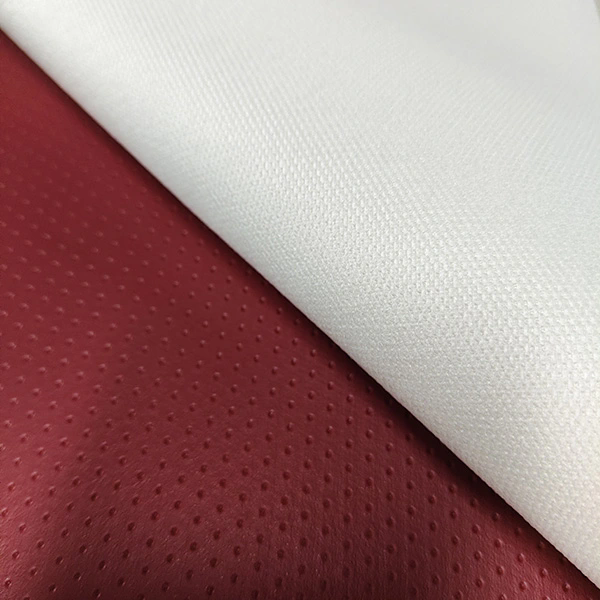
The difference between sheep leather and cow leather begins at the microscopic level, in the structure of the animal's skin. Shoe Leather is composed of two primary layers: the grain layer (the outer surface) and the corium layer (the fibrous inner layer). The thickness, density, and arrangement of the collagen fibers in these layers determine the leather's mechanical properties. Research using small-angle X-ray scattering has revealed that cow skin collagen fibrils have the largest diameter among common leather animals, while sheep skin fibrils are smaller and arranged differently. Cow skin fibrils are aligned in two main directions approximately 60 and 90 degrees apart, while sheep skin fibrils are more randomly oriented and crimped in appearance.
This structural difference translates directly into performance. The dense, aligned fiber structure of cow leather gives it high tensile strength and excellent tear resistance. The more open, randomly oriented fiber structure of sheep leather gives it high flexibility and softness but lower resistance to tearing and abrasion. The grain layer of sheep leather is approximately 50% of the overall thickness, which is a higher proportion than in cow leather. This means that sheep leather has a thinner corium layer relative to its total thickness, and it is this corium layer that provides the structural strength. The following table summarizes the key structural differences.
| Structural Feature | Sheep Leather | Cow Leather |
| Fiber Diameter | Intermediate | Largest (thickest fibrils) |
| Fiber Orientation | Random, crimped appearance | Aligned in two main directions |
| Grain to Corium Ratio | Approximately 0.25-0.46 | Lower grain proportion |
| Hide Thickness | 0.5-1.0 mm (thin) | 1.2-1.8 mm (thicker) |
| Collagen Crosslink Type | Lower mature to immature ratio | Higher proportion of tetravalent links |
At Ningbo Most-Textile Trading Co., Ltd., we source and supply Shoe Leather from a range of tanneries and have conducted extensive comparative testing on sheep and cow leathers for footwear applications. Our experience confirms the research findings: the structural differences between these two leathers are not superficial but fundamental, and they determine the suitability of each material for specific shoe types. Understanding these differences is the first step in selecting the right Shoe Leather for your product.
The primary advantage of sheep leather for footwear is its exceptional softness and flexibility. Sheep leather is renowned for its fine, smooth grain and its supple, almost fabric-like hand feel. It is significantly softer than cow leather and requires little to no break-in period. For shoes that are worn close to the foot or that need to conform to the contours of the wearer's feet, this softness is a major advantage. Women's fashion shoes, particularly those with pointed toes or delicate straps, benefit from the flexibility of sheep leather, which allows the shoe to bend and flex naturally with the foot. Sheep leather is also highly breathable, thanks to its open fiber structure, making it a comfortable choice for warm climates or for shoes worn for extended periods.
Another advantage of sheep leather is its natural resistance to cracking. Because it is rich in natural oils and has a flexible fiber structure, it can be folded and bent repeatedly without developing the surface cracks that can affect stiffer leathers. This makes it suitable for applications where the shoe upper needs to flex significantly during walking, such as ballet flats or soft loafers. The table below summarizes the comfort-related advantages of sheep leather compared to cow leather.
| Comfort Property | Sheep Leather | Cow Leather |
| Softness | Excellent (very soft) | Moderate (firm, requires break-in) |
| Flexibility | Excellent (drapes like fabric) | Good (stiffer, holds shape) |
| Breathability | Excellent (open fiber structure) | Good (denser structure) |
| Break-in Period | Minimal (ready to wear) | Can take weeks |
| Crack Resistance (Flexing) | Good (natural oils) | Good (but stiffer) |
| Weight | Lightweight | Heavier |
The comfort advantages of sheep leather make it a preferred material for women's footwear, where style and comfort are often equally important. However, it is important to note that these same properties—softness, flexibility, and thinness—also mean that sheep leather is less durable than cow leather. It is more susceptible to scratching, tearing, and stretching out of shape. For shoes that will be subjected to heavy wear or rough treatment, sheep leather may not be the best choice. At our factory, we help our customers evaluate these trade-offs and select the Shoe Leather that best matches their product's intended use and target market.
Cow leather is the most widely used Shoe Leather for footwear worldwide, and for good reason. It is the strongest and most durable of the common shoe leathers. Cowhide is significantly thicker than sheepskin, typically measuring 1.2-1.8 mm compared to 0.5-1.0 mm for sheep leather. This greater thickness, combined with the dense, aligned fiber structure described earlier, gives cow leather excellent tensile strength and tear resistance. It can withstand the abrasion and flexing that shoes endure during daily wear far better than sheep leather.
Beyond raw strength, cow leather also excels in shape retention. It is stiffer than sheep leather and can be molded and shaped during the shoe-making process to hold its form over time. This is why cow leather is the material of choice for structured shoes such as men's dress shoes, Oxfords, and Derbys, where a clean, defined silhouette is essential. Cow leather also takes a high polish and can be finished to a smooth, glossy surface that maintains its appearance with minimal maintenance. The table below compares the durability characteristics of the two leathers.
| Durability Property | Sheep Leather | Cow Leather |
| Tensile Strength | Moderate (weaker fibrils) | High (strongest of common leathers) |
| Tear Resistance | Low (thin, loose fibers) | High (dense, aligned fibers) |
| Abrasion Resistance | Poor (easily scuffed) | Good to Excellent |
| Scratch Resistance | Poor (fine grain shows scratches) | Good (thicker grain layer) |
| Shape Retention | Poor (stretches out of shape) | Excellent (holds form) |
| Water Resistance | Poor (absorbs moisture) | Moderate (better with treatment) |
| Expected Shoe Lifespan | 2-5 years (with daily use) | 5-10+ years (with care) |
For children's shoes, work boots, and any footwear that will be subjected to hard wear, cow leather is the clear choice. Its durability means the shoes will last longer, provide better protection for the foot, and maintain their appearance for longer. At Ningbo Most-Textile Trading Co., Ltd., we supply cow leather in a range of finishes and thicknesses to suit different shoe types, from soft, supple leathers for casual shoes to firm, structured leathers for formal footwear.
The choice between sheep leather and cow leather should be guided by the specific requirements of the shoe being manufactured. There is no universal best Shoe Leather; there is only the Shoe Leather that is best suited to the application. The following table provides a practical application matrix that matches shoe types with the recommended leather, based on the material properties discussed in the previous sections.
| Shoe Type | Recommended Leather | Rationale |
| Women's Dress Shoes | Sheep Leather (upper) / Cow Leather (sole) | Softness and flexibility for the upper; durability for the sole |
| Men's Dress Shoes | Cow Leather | Shape retention, durability, takes a high polish |
| Casual Loafers / Moccasins | Sheep Leather or Soft Cow Leather | Comfort and flexibility are priorities |
| Work Boots | Cow Leather (thick, full-grain) | Maximum durability, abrasion resistance, foot protection |
| Children's Shoes | Cow Leather | Withstands rough play, holds shape, provides support |
| Shoe Linings | Sheep Leather | Soft, breathable, comfortable against the foot |
| Fashion Sneakers | Cow Leather or Sheep Leather (depending on design) | Cow for structure; sheep for soft, deconstructed styles |
| Boots (Fashion) | Sheep Leather (soft styles) or Cow Leather (structured styles) | Depends on the desired silhouette and durability |
The application matrix reveals a clear pattern. Sheep leather is preferred for applications where the shoe is worn close to the foot, where flexibility and breathability are important, and where the shoe is not subjected to heavy wear. Cow leather is preferred for applications where durability, shape retention, and protection are the primary requirements. In some shoes, a combination of both leathers is used: sheep leather for the lining (where comfort matters most) and cow leather for the upper (where durability matters most). This hybrid approach leverages the strengths of each material.
At our factory, we work with footwear manufacturers to select the optimal Shoe Leather for each component of the shoe. We maintain an extensive inventory of both sheep and cow leathers in a range of colors, finishes, and thicknesses, and we can provide technical data sheets and samples for evaluation. Our goal is to help our customers achieve the best possible combination of comfort, durability, and aesthetic appeal in their products.
For buyers and quality control professionals, the ability to distinguish sheep leather from cow leather is an essential skill. The two materials can look similar in finished products, especially when they are heavily pigmented or coated. However, several visual and physical tests can help identify the leather type. The most reliable method is microscopic examination of the grain surface, where the pore pattern is distinctive. Sheep leather has a characteristic pore pattern: the pores are small, round, and arranged in clusters or groups, creating a pattern that resembles a fine, rippled surface. Cow leather has larger, more widely spaced pores that are distributed individually rather than in clusters.
In the absence of a microscope, several field tests can provide strong indications. The softness test is the most straightforward: sheep leather is noticeably softer and more pliable than cow leather of comparable thickness. When squeezed, sheep leather folds easily and shows fine, temporary creases, while cow leather resists folding and tends to spring back to its original shape. The scratch test can also be useful: because sheep leather has a finer grain, it is more easily scratched by a fingernail, leaving a visible mark. Cow leather is more resistant to light scratching. The table below summarizes the identification methods.
| Identification Method | Sheep Leather | Cow Leather |
| Pore Pattern (Microscope) | Small, round pores in clusters | Larger, individual pores |
| Softness / Hand Feel | Very soft, drapes easily | Firm, resists folding |
| Crease Behavior | Fine, temporary creases when squeezed | Fewer creases, springs back |
| Scratch Resistance | Easily scratched (fine grain) | More resistant to light scratches |
| Weight (per unit area) | Lighter | Heavier |
| Stretch Recovery | Stretches easily, slow recovery | Less stretch, better recovery |
It is important to note that some sheep leathers are treated or finished to mimic the appearance of cow leather, and vice versa. In these cases, laboratory testing may be required for definitive identification. At Ningbo Most-Textile Trading Co., Ltd., we provide material identification support to our customers and can supply certified test reports from independent laboratories for any Shoe Leather we supply. This ensures that our customers receive exactly the material they specify, with no ambiguity.
Question 1: Is sheep leather suitable for men's dress shoes?
Answer: Sheep leather is generally not recommended for men's dress shoes that require structure and shape retention. Its softness and lack of rigidity mean that it cannot hold the crisp, defined silhouette that characterizes formal men's footwear. Cow leather, or sometimes goat leather, is the preferred Shoe Leather for these applications. However, sheep leather can be used for men's casual shoes or slippers where comfort is the priority over structure.
Question 2: Why is sheep leather more expensive than cow leather in some cases?
Answer: The price of Shoe Leather depends on several factors, including the quality of the raw hide, the tanning process, and the size of the hide. Sheep leather is often more expensive per square foot because sheep hides are smaller than cow hides, resulting in more waste and higher processing costs per unit area. Additionally, high-quality sheep leather with a fine, unblemished grain is prized for luxury applications, which can drive up the price.
Question 3: Can sheep leather shoes be repaired?
Answer: Sheep leather shoes can be repaired, but the options are more limited than for cow leather shoes. Because sheep leather is thin and soft, it does not respond as well to traditional repair techniques such as resoling and rewelting. In many cases, the upper of a sheep leather shoe is the limiting factor in its lifespan, and once it is significantly worn or torn, repair may not be practical or cost-effective. Cow leather shoes, with their thicker and stronger uppers, are generally more repairable and can be resoled multiple times.
Question 4: How should I care for sheep leather shoes compared to cow leather shoes?
Answer: Sheep leather shoes require more careful maintenance than cow leather shoes. They should be protected with a water-repellent spray and conditioned regularly to prevent drying and cracking. Because sheep leather is prone to scratching, care should be taken to avoid contact with sharp objects. Cow leather shoes are more forgiving and can be maintained with standard leather care products, including polish and conditioner. Both types of leather should be kept away from direct heat and prolonged moisture exposure.
Question 5: Is sheep leather more breathable than cow leather?
Answer: Yes, sheep leather is generally more breathable than cow leather due to its more open fiber structure and higher porosity. This makes sheep leather a comfortable choice for shoes worn in warm weather or for people who are prone to foot perspiration. Cow leather is also breathable, but its denser fiber structure means that it is less permeable to air and moisture vapor than sheep leather.
The comparison between sheep leather and cow leather for shoes is not a contest with a single winner. It is a study in trade-offs. Sheep leather offers unmatched softness, flexibility, and breathability, making it ideal for women's fashion shoes, linings, and lightweight footwear where comfort is the primary consideration. Cow leather offers superior durability, shape retention, and abrasion resistance, making it the preferred choice for structured shoes, work boots, and footwear that must withstand heavy use. Understanding these differences allows footwear manufacturers and buyers to make informed decisions that match the Shoe Leather to the application.
At Ningbo Most-Textile Trading Co., Ltd., we supply both sheep leather and cow leather for footwear manufacturing, along with technical consultation to help our customers select the right Shoe Leather for their specific needs. Our factory is equipped to handle orders of all sizes, from sample quantities to full container loads, and we maintain strict quality control standards to ensure that every shipment meets our customers' specifications. Whether you are producing high-fashion women's shoes or rugged work boots, we have the Shoe Leather you need.
Contact Ningbo Most-Textile Trading Co., Ltd. today to discuss your Shoe Leather requirements and request samples for evaluation.